

A look behind the door of an industry that has more to do with precise communication than with anything pop culture would have you believe.
Say „BDSM escort“ and most people picture latex, leather whips, and dimly lit basement dungeons. What Hollywood has been selling for decades as a moody cliché is, in reality, a highly professional service field — one with clear rules, finely tuned communication, and an ethos that is, in some respects, stricter than most other industries. It’s time to sort a few things out.
What Does „BDSM Escort“ Actually Mean?
BDSM is an umbrella term built from three pairs of letters: Bondage & Discipline, Dominance & Submission, and Sadism & Masochism. It describes consensual practices in which power, control, sensation, and role-play take center stage — sex isn’t necessarily part of the picture.
A BDSM escort — more commonly referred to as a dominatrix, a professional submissive, or a switch — is someone who offers such sessions for a fee. Unlike traditional escort work, the focus is rarely on intercourse; many professional dominatrices explicitly exclude sexual services. What they offer instead are staged power dynamics, physical sensations, psychological scenarios — and above all, a safe container for experiences that are difficult to realize in private life.
What is a BDSM Escort?
A BDSM escort is a professional companion who offers consensual experiences centered around power exchange, role play, fetish interests, and psychological dynamics. Unlike common stereotypes, BDSM sessions are typically built on communication, trust, clear boundaries, and mutual agreement rather than on spontaneity or shock value.
Depending on the provider and the client’s interests, a session may involve domination, submission, bondage, discipline, sensation play, role-playing scenarios, or other forms of consensual kink. Sexual contact is not necessarily part of the experience. Many professional BDSM providers focus primarily on creating structured power dynamics and immersive psychological experiences.
Before any session takes place, reputable BDSM escorts discuss expectations, limits, safety protocols, and personal preferences in detail. Concepts such as safewords, consent, aftercare, and risk awareness are fundamental parts of professional BDSM practice.
At its core, BDSM is less about pain or spectacle and more about trust, communication, and the exploration of power within clearly negotiated boundaries. For many participants, the psychological connection is just as important as the physical experience.
The Main Roles
Dominatrix (or Dom): The dominant party who takes control during the session. Titles vary by style — „Mistress,“ „Madame,“ „Lady,“ and „Goddess“ are all common in the English-speaking world.
Professional Submissive: A submissive who offers services to clients who want to take the dominant role. This segment of the market is smaller and less visible, but it exists.
Switch: Someone who offers both roles and shifts between dominant and submissive depending on the client’s wishes.
Beyond these core roles, specializations abound: foot fetish, rope-bondage artists (working in the Japanese traditions of Shibari and Kinbaku), instructors in so-called slave training, verbal humiliation, cross-dressing companionship, and far more. The range is wide, the market well-differentiated.
The Legal Landscape
In the United States, the legal picture is fragmented. Full-service sex work is illegal almost everywhere except in a handful of licensed brothels in rural Nevada counties. But professional BDSM occupies a more complicated space: many dominatrices argue, often successfully, that what they offer is not prostitution, since no sexual contact takes place. Some operate openly as „dungeons“ or „studios,“ while others maintain strict no-touch or limited-contact policies precisely to stay clear of solicitation statutes.
Then there is criminal law more broadly. Consent is not always a complete defense to bodily injury: many U.S. jurisdictions follow the common-law principle that you cannot consent to „serious bodily harm.“ Where exactly that line falls varies state by state, and the case law is uneven. Reputable practitioners know this gray zone and operate well within clearly defined safety standards.
For comparison: Germany legalized sex work in 2002 and regulates it under the Prostitute Protection Act of 2017, which requires providers to register and undergo health counseling. The Netherlands, New Zealand, and parts of Australia have similar regulatory frameworks. The United States remains an outlier among comparable democracies.
How a Booking Works
Contrary to the cliché, a session rarely starts with a phone call and ends thirty minutes later. The actual process unfolds in stages.
1. Initial Contact. Clients typically reach out by email or a contact form on the provider’s website. Phone introductions are uncommon — they can’t be documented and don’t leave room for careful consideration.
2. Screening and Briefing. Reputable providers screen their clients. Once a client is approved, the conversation turns to expectations, experience, medical considerations, and desires. Many practitioners use detailed questionnaires listing possible activities, which the client sorts into „Yes“ / „Maybe“ / „No“ categories. These lists often run several pages and cover everything from bondage to wax play to psychological scenarios.
3. Negotiating Limits. The vocabulary distinguishes between hard limits (absolute taboos that will not be crossed under any circumstances) and soft limits (areas that might be considered under specific conditions). This agreement is the foundation of the entire session.
4. The Safeword. Before every session, the parties agree on a word that immediately stops play. The most common convention is a traffic-light system: „Green“ means all is well, „Yellow“ means slow down or ease up, „Red“ means stop now. For scenes where speech is difficult or impossible (gags, masks), nonverbal signals are used — typically the client holding an object that they drop to signal „red.“
5. The Session Itself. It might last an hour or stretch across several days (so-called „live-in“ weekends). The content is governed by the agreements reached beforehand.
6. Aftercare. More on this in a moment.
The Guiding Principles: SSC and RACK
Two acronyms shape the ethical self-understanding of the scene.
SSC — Safe, Sane, Consensual is the older, more conservative principle. It requires that all practices be carried out safely, that everyone involved be of sound mind, and that consent be explicit.
RACK — Risk-Aware Consensual Kink is the newer formulation. It acknowledges that some practices can never be entirely „safe“ — some level of risk is always present. The question, by this standard, is whether everyone involved understands the risks and accepts them knowingly.
Both share a core commitment: consent is non-negotiable. Anyone who works around it — through manipulation, pressure, or by concealing risks — has left the BDSM playing field and entered the territory of assault.
What Does a Session Cost?
Prices vary widely with region, experience, studio amenities, and session length. As a rough guideline in major U.S. cities, $300 to $600 per hour is typical, with top-tier providers in New York, Los Angeles, and San Francisco charging considerably more. BDSM escorts who specialize in rough or extreme play charge higher rates. Longer sessions, travel, outdoor scenes, or unusual specializations are priced separately.
Suspiciously low prices should raise a flag. Professional BDSM work requires a properly outfitted studio, high-quality equipment, insurance, ongoing training — and, above all, time for the preparation and follow-up that don’t show up in the hourly rate.
How to Identify a Reputable Provider
There are clear markers of professionalism — and warning signs worth taking seriously.
Good signs: A carefully designed website with clear information about style, limits, and pricing. Thorough pre-session conversations. Established booking protocols. Willingness to answer questions. Connections within the community, references, a coherent professional background. Insistence on hygiene and safety standards. A transparent line between what is and isn’t on offer — whatever that line happens to be, it should be plainly stated.
Red flags: Pressure to book quickly. Refusal to have a screening conversation. Unclear pricing or hidden surcharges. Promises that „anything goes.“ Missing limits checklists or safewords. Any indication that the person isn’t working voluntarily. On that last point: anyone who suspects coercion or trafficking should contact the National Human Trafficking Hotline (1-888-373-7888) or, in an immediate emergency, the police.
Aftercare: The Invisible, Most Important Part
An intense BDSM session can be physically and emotionally demanding. Both the submissive and the dominant party may afterward enter what’s called a „drop“ — a kind of emotional hangover triggered by plummeting adrenaline and endorphin levels.
Aftercare refers to everything that happens after the scene to bring those involved safely back into the everyday: a conversation, something to drink, physical warmth, attending to minor skin irritations, sometimes a check-in message the next day. Professional providers plan for aftercare and factor that time into their rates.
Anyone who doesn’t offer aftercare, or dismisses it as unnecessary, hasn’t understood the job.
Common Misconceptions
„BDSM escorts are all working through trauma.“ It’s an old stereotype, and the research doesn’t support it. People choose this profession for all kinds of reasons — economic, intellectual fascination with power dynamics, psychological aptitude, or the autonomy of setting their own hours.
„The clients must be weirdos.“ Again, the picture in the studies looks different. Clientele cuts across the social spectrum, tends to be well-educated, and is often working in positions of responsibility. Executives, doctors, teachers, tradespeople — kink doesn’t correlate neatly with any demographic.
„BDSM and abuse are the same thing.“ The decisive difference is consent. Abuse violates a person’s will; BDSM stages a willing surrender that can be withdrawn at any time. Confusing the two means understanding neither.
Why People Do It
Client motivations are as varied as the clients themselves. Some are seeking a counterweight to a daily life full of responsibility — the chance to hand over control for a few hours. Others are pursuing a specific desire they couldn’t share with a partner. Still others arrive out of curiosity, in search of a boundary experience, or to chase a particular sensation — pain as a form of sensory exploration rather than punishment.
For all the variety, one constant runs through it: this is headwork. BDSM is less body than psychology, less spectacle than choreography. Those who do it professionally are part therapist, part director, part choreographer — and skilled tradesperson on top.
Conclusion
BDSM escort work is often misunderstood because most people only encounter it through stereotypes, sensational headlines, or fictional portrayals. In reality, professional BDSM is built on communication, consent, preparation, and trust. The best practitioners understand that power is not created through force, but through responsibility, clarity, and mutual respect.
For anyone considering their first BDSM session, taking the time to learn, ask questions, and choose a reputable provider is the most important step.
Meet jO
If you are curious about BDSM power exchange and would like to experience it in a safe, discreet, and authentic setting, I invite you to learn more about me.
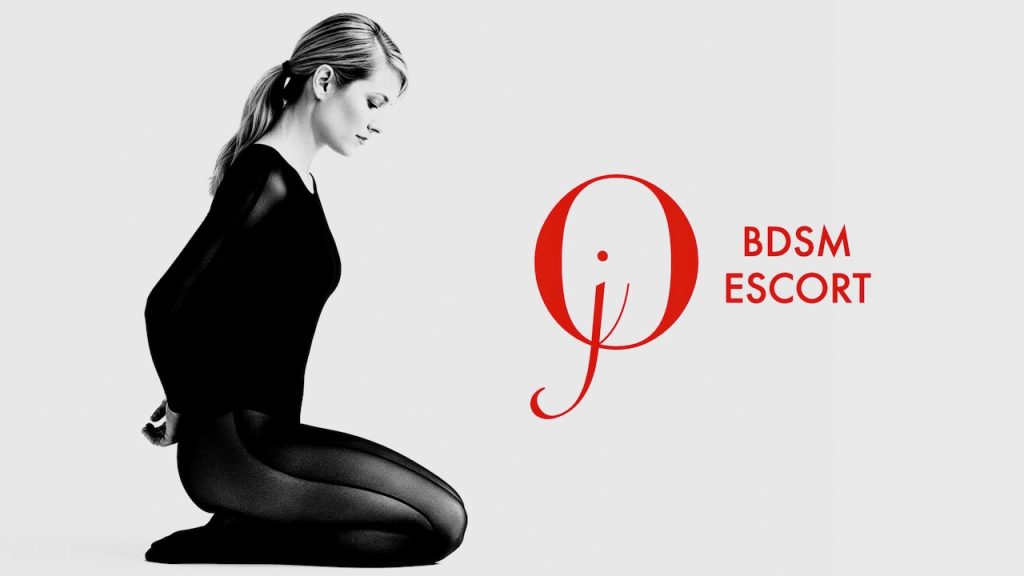
Unlike many providers, submission is not a performance I put on for a session. It is part of who I am. As an independent submissive escort, I offer carefully selected encounters built on communication, trust, mutual understanding, and genuine connection.
Whether you are completely new to BDSM or already experienced, every meeting begins with a conversation about expectations, boundaries, and compatibility.
Learn more about me, explore my gallery, or request a private meeting in New York City and other international destinations.
jO
You may also like to read:
Story of O Rules Explained: List, Meaning and Reality
What Is a Submissive Escort? A Closer Look at a Misunderstood Profession
Note: This article is intended for general information. In the United States, advocacy and harm-reduction resources include the National Coalition for Sexual Freedom (NCSF) and SWOP (Sex Workers Outreach Project). Anyone concerned about coercion or trafficking should contact the National Human Trafficking Hotline at 1-888-373-7888.
FAQs
What is a BDSM escort?
A BDSM escort is a professional companion who offers consensual BDSM experiences centered around power exchange, role play, sensation, and psychological dynamics. Sexual contact is not necessarily part of a BDSM session.
What makes a BDSM escort different from a traditional escort?
Unlike traditional escort services, BDSM escorts typically focus on structured power dynamics, fetish experiences, bondage, discipline, domination, submission, and other negotiated activities. The emphasis is often on the experience itself rather than on sexual intimacy.
What roles exist within professional BDSM services?
Common roles include dominatrixes who take the dominant role, professional submissives who offer submission-based experiences, and switches who can move between dominant and submissive roles depending on the agreed dynamic.
What happens before a BDSM session?
Professional BDSM sessions usually begin with a detailed discussion about expectations, experience levels, interests, boundaries, medical considerations, and desired activities. This preparation helps create a safe and enjoyable experience for everyone involved.
What are hard limits and soft limits?
Hard limits are activities that are completely off-limits and will never be performed. Soft limits are activities that may be considered under specific circumstances depending on comfort levels, trust, experience, and mutual agreement.
What is a safeword?
A safeword is a pre-agreed word or signal that immediately slows down or stops a BDSM scene. Many practitioners use the traffic-light system: green means continue, yellow means slow down, and red means stop immediately.
What do SSC and RACK mean in BDSM?
SSC stands for Safe, Sane, Consensual, while RACK means Risk-Aware Consensual Kink. Both principles emphasize informed consent, communication, personal responsibility, and awareness of potential risks.
How much does a professional BDSM session cost?
Prices vary depending on location, provider experience, session length, and specialization. In major cities, rates can range from several hundred dollars per hour to significantly higher amounts for established professionals and specialized experiences.
How can I identify a reputable BDSM provider?
Professional providers usually offer clear information about services, boundaries, pricing, and booking procedures. They prioritize communication, consent, screening, safety standards, discretion, and realistic expectations.
What is aftercare in BDSM?
Aftercare refers to the physical and emotional support provided after a BDSM scene. It may include conversation, hydration, emotional reassurance, physical comfort, and follow-up communication to help participants transition comfortably back to everyday life.
Is BDSM the same as abuse?
No. The defining difference is consent. BDSM activities are negotiated in advance, based on mutual agreement, and can be stopped at any time. Abuse ignores or violates a person’s boundaries and wishes.
Why do people seek BDSM experiences?
People pursue BDSM for many reasons, including curiosity, exploration of power dynamics, stress relief, fantasy fulfillment, sensory experiences, personal growth, and the opportunity to explore desires within a structured and consensual environment.